Parkinson’s Disease (PD)
Restoring the multiple neuron populations lost in Parkinson’s — not dopamine alone.
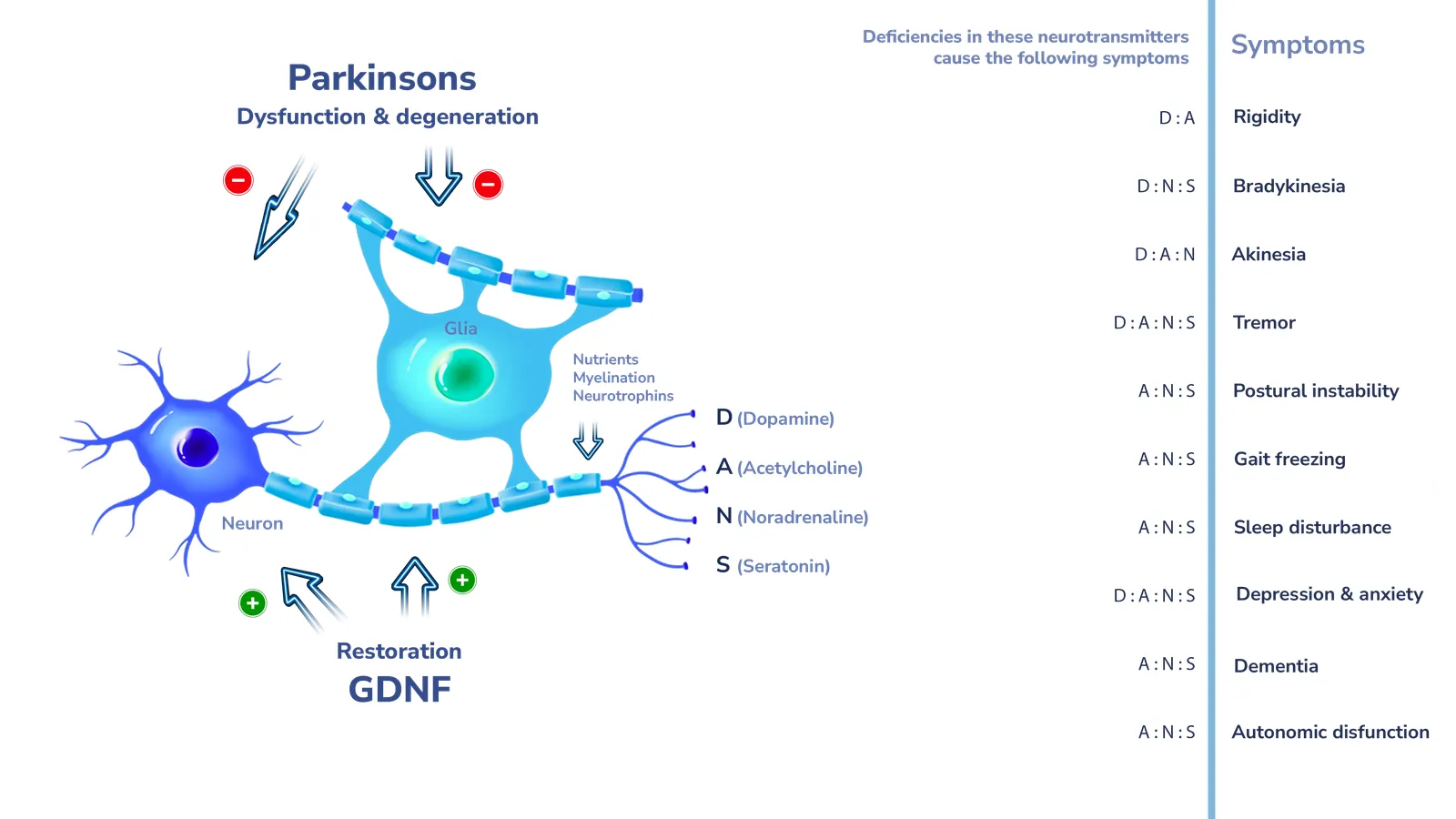
Although the progressive loss of dopamine neurons is the hallmark of Parkinson’s, the loss of serotonergic, noradrenergic and cholinergic neurons contributes significantly to the full symptom profile.
Loss of dopamine causes rigidity, bradykinesia, postural instability and tremor. Loss of serotonin exacerbates motor symptoms and underlies much of the non-motor burden — depression, anxiety, sleep disturbance and cognitive impairment. Loss of noradrenalin worsens gait freezing and fatigue and drives autonomic dysfunction, while loss of acetylcholine affects attention, memory and postural stability. The disease is also associated with glial dysregulation and chronic inflammation.
GDNF is neuroprotective and neurorestorative to all four neuron types and promotes the glial cells that provide metabolic support and reduce inflammation. In pre-clinical models of Parkinson’s, delivery of GDNF to the striatum is associated with recovery of motor function — addressing both the motor and non-motor aspects of the disease.
← Back to the pipeline